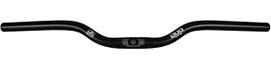
Cycling Handlebars
Cycling of various forms suggests different
designs
There are basically 3 types of material that are used in the construction
of cycling handlebars. Cycling, especially if your passion is for
offroad, can exert significant stress on your bars. Thus when choosing
between steel, aluminum, titanium or carbon fibre bike handle bars
it may be worth doing a little extra research to make sure you make
the correct choice for your temperment and style of riding... but
first here are a few basics on what style might be best for you,
before you actually get into the specifics of its material composition:
Design Options:
Riser Handle Bars:
There are basically 3 different designs (Risers, Flats and Drop)
of handlebars. Cycling off road would suggest using a riser design
that bends the handle bars 1-2" up higher than the stem clamp.
This puts the rider in a more upright position and forces your weight
to the back of the bike for more effective handling on down hill
runs. As with all good things this has a negative effective as well.
It obviously takes the weight off the front wheel and in aggressive
climbs makes for poor steerage. You must compensate by consciously
leaning forward in a more prone position.
This bar is also often used by the casual street rider that choses
a more upright style. They are not interest in racing and time trials
thus less concerned about the aero dynamic benefits of a dropped
handlebar.
Flats: Bike handle bars that are perfectly straight with
no upward bend at the stem clamp are generally referred to as
"flats". They are somewhat of a middle of the road compromise
between the more upright riser design and the aerodynamic "drop"
cycling handlebar.
Both the flats and the riser style tend to be designed a few inches
longer for more stable stargaze. This is great on relatively open
terrain but can be somewhat of an issue if your riding passion is
through forest trails and the extra width of the bike bar can cause
hang-ups and tangles on a narrow single track. Good thing is that
a hack saw can be used to trim the width if this becomes an issue.
Mountain bike handle bars, riser or flat, come in a wide range
of prices but the riser style does tend to cost more money and weigh
more than the flat mountain bike handlebar... I guess just because
of the added manufacturing complexity and greater wall thickness
at the bend, to assure strength consistency over its entire length.
Drop Cycling Handlebars: Designed for
the cycling enthusiast that is passionate about road racing where
aerodynamics is the name of the game. These handle bars typically
dropped 140-152 mm below the level of the stem clamp (A) and 85-100
mm of reach (B). Length tends to run between 40 and 46 cm to match
approximately your shoulder width. Remember that these lengths can
not be adjust after the fact like a flat or riser bar. Your body
size and proportions will determine what is the most comfortable
for your riding style, so best to shop at your local bike shop so
that you can find a bar that fits.
The more expensive bars will have a smooth curvature from top to
bottom to allow for numerous hand and brake mounting positions.
Aero Handlebars: bike aero bars (often referred to as clip-on
aero bars) are an add-on to the typical handle bar that allows you
to ride in an even more aerodynamic position with your arms out
in front of you in a triangular, more streamlined position, rather
than with your hands dropped below the stem clamp. If you intend
to use this type of cycling handlebar be sure that your original
bars will accept an aero clip-on bar BEFORE you purchase.
|