A Bicycle seat post typically comes in two different designs
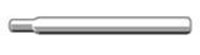
- A steel or aluminum shaft tapered at one end, similar to a
tent post. A separate clamp, washer and bolt system is used
to attach the rails of bike saddle to this seatpost. Sliding
it back and forth along the rails adjust its relative position
to the handlebars. This is most often found on less expensive
bicycles.
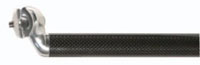
- The more modern version of a bicycle seat post combines the
post and the saddle clamp into one unit
. They come with either one or two bolts that clamp mated metal
plates onto either side of the rails of your bicycle saddle. Typically
the two bolt pattern has greater strength and accuracy when adjusting
the front-rear position and the tilt.
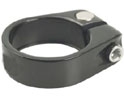
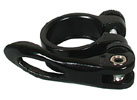
Seat Post Clamps: Bike seat
posts also require a seat post clamp. This is what holds the post
at the right height within the bicycle frame. There are typically
two styles. The one on the left is tightened with a wrench or
allan key. The one on the right, my preference, uses a quick lock
lever and can be adjusted quickly and without the use of any tools.
Post Composition:
- steel: usually chromed for greater rust resistance
- aluminum: great for weight but rigid and have to watch tightening
up the aluminum screws... they can snap. And remember not all
aluminum is created equal.. there is airplane grade and well,
you know the stuff in the coke© tin.
- titanium, great for weight & flexing on aggressive trails
- carbon fiber seat posts.. carbon fiber is the newbie on the
block as far as material science goes. Its structure has natural
ability to dissipate vibration which of course is the benefit
in using it for seatposts. It is NOT typically lighter than
its aluminum cousin, but it does have greater production flexibility.
Weight: there is a wide range of weights, mostly depending
on the size (both length & diameter), with or without suspension
and composition (steel, aluminum etc), so difficult to cross reference
without having all the details... and almost impossible to use
this as a measuring stick of quality. A very thin aluminum post
will be very light, but stand no chance to survive most aggressive
mountain biking:
Typically 155-270grams
Seatpost Diameter: There is a very large range of seatpost
diameters. Thus it is important to mate the diameter of the post
to the specifications of the bike frame itself. Some of the posts
coming from Europe can have as little as a .2mm difference in
diameter, so it is best to go to a local bike shop that has either
the frame spec's or a proper measuring tool to get you the right
sized stem. If matched incorrectly you may have trouble tightening
the seat post clamp sufficiently to prevent seat slippage.
Length: As with diameters, bicycle seat posts come in
a wide range of lengths. The choice will partly depend on your
frame design and how much height you need on the stem to adjust
for your riding comfort. Typically a mountain bike seat post is
between 350-400mm. The mountain frame is smaller so the post must
be longer and typically more rugged. A road bike seat post is
around 250mm. A road bike frame is larger so the post doesn't
have to be quite as long to get the leg length you need.
It is important to note that all seatposts have a mark along
the shaft to indicate the maximum extension of exposed shaft..
the balance of the stem is required to be inserted into the frame
for overall clamping strength. Trust me.. don't go beyond that
mark. I have actually snapped a seat post that I'd jacked too
high!
A Bike Seat Post with Suspension: Gas, springs and elastomers
are all used to provide some dampening abilities to the seat post.
I'll add some more info what I get a few extra minutes.